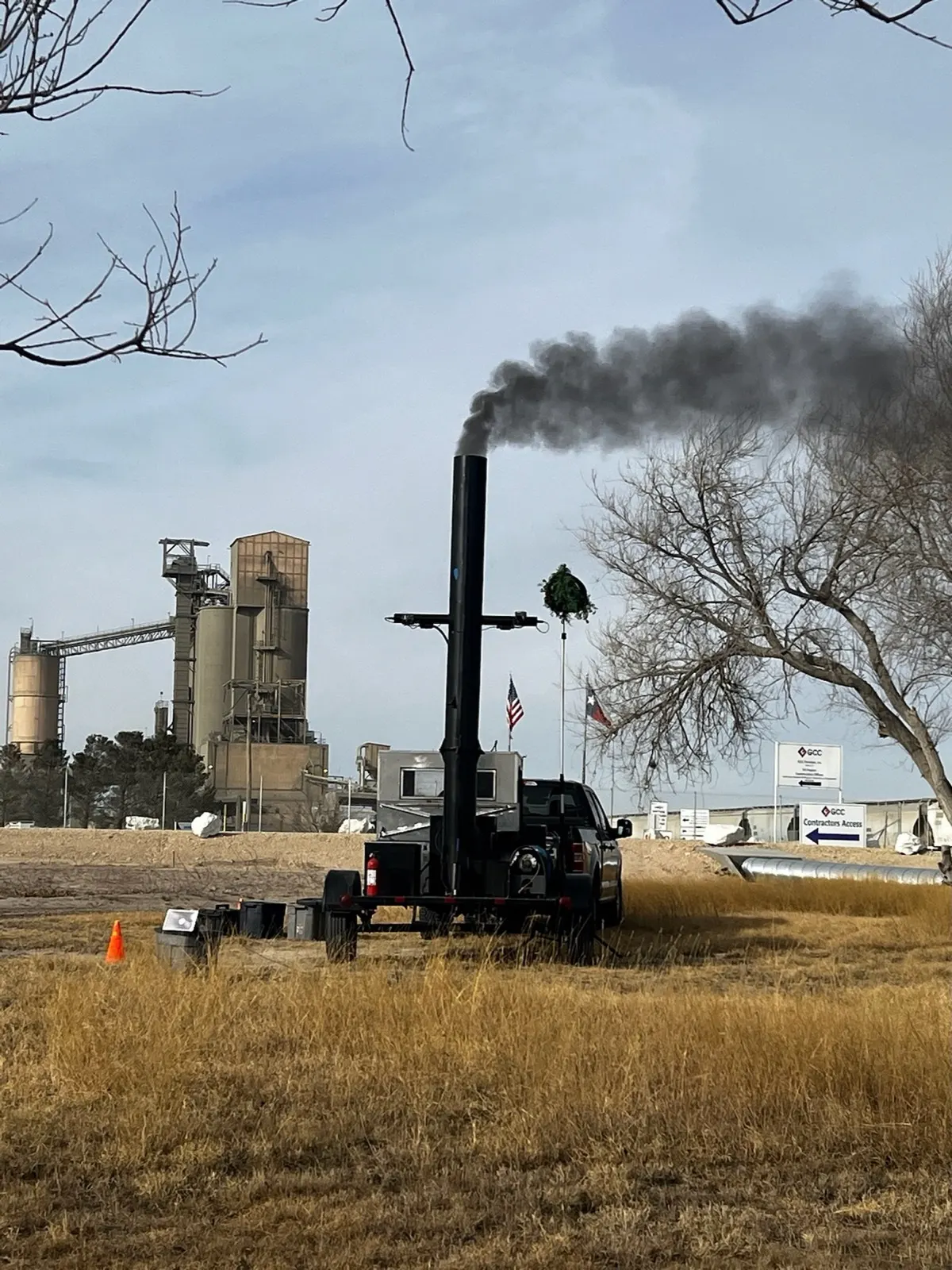
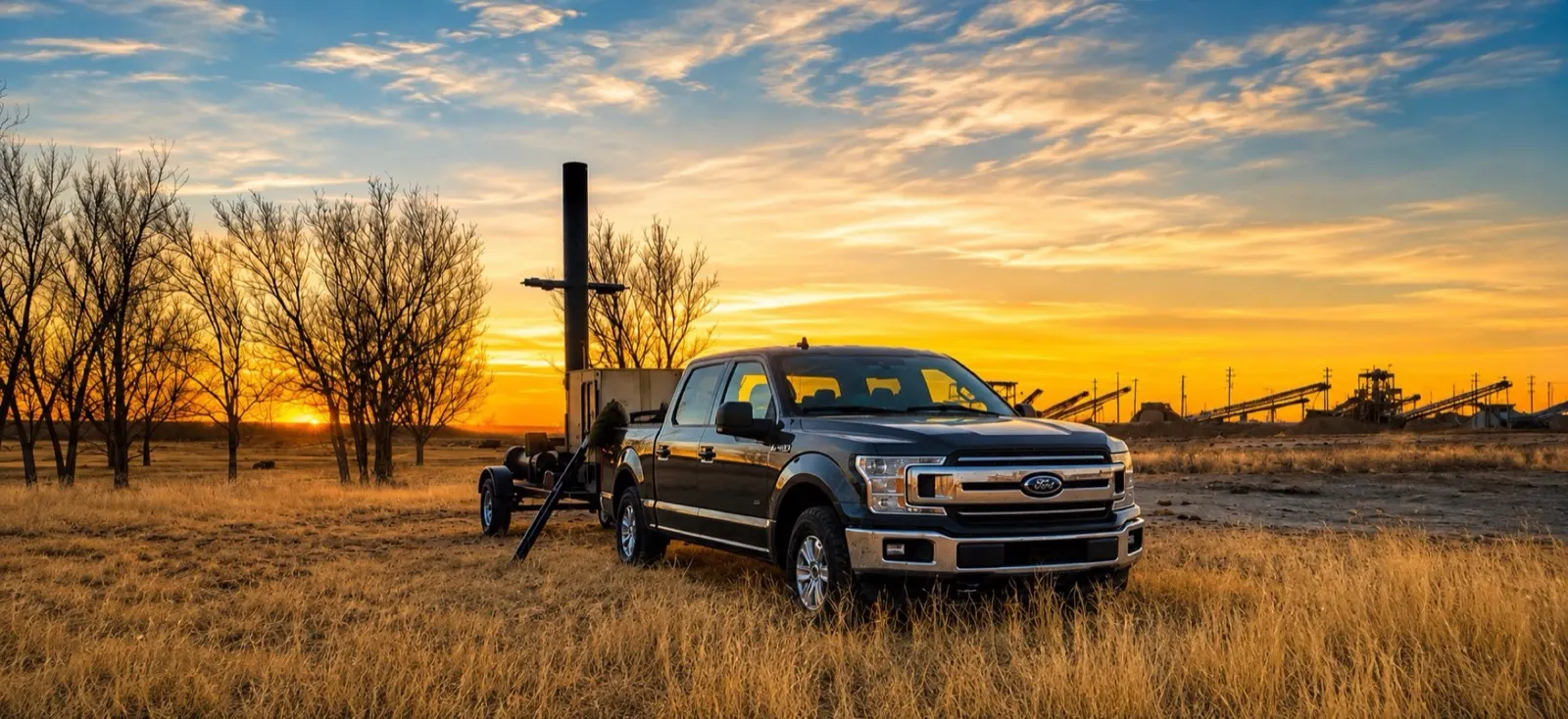
Observer watching an emission point at an industrial facility

Fugitive emissions and flare observations

EPA Method 22

Method 22 answers a simpler question than Method 9: are visible emissions present, and for how long? Learn what the method requires, how it compares with Method 9, and how to train your observers.

Questions? (913) 825-3644
Training since
2005
Service area
Nationwide
EPA Methods
9 · 22 · 203
Formats
In-person · VR

A practical certification path

How EPA Method 22 Works

Method 22 is the method behind "no visible emissions" limits. It is simpler than Method 9, but it still has rules on distance, lighting and timing.

What Method 22 measures

EPA Method 22, Visual Determination of Fugitive Emissions from Material Sources and Smoke Emissions from Flares, determines whether visible emissions are present. The observer records how long emissions are seen during the observation period instead of assigning an opacity percentage.

Where it is used

Method 22 is common for fugitive emissions from material handling, storage piles, roads, conveyors and building openings, and for smoke from flares. Flare rules, for example, can limit visible emissions to a set number of minutes in a two-hour period.

How an observation is run

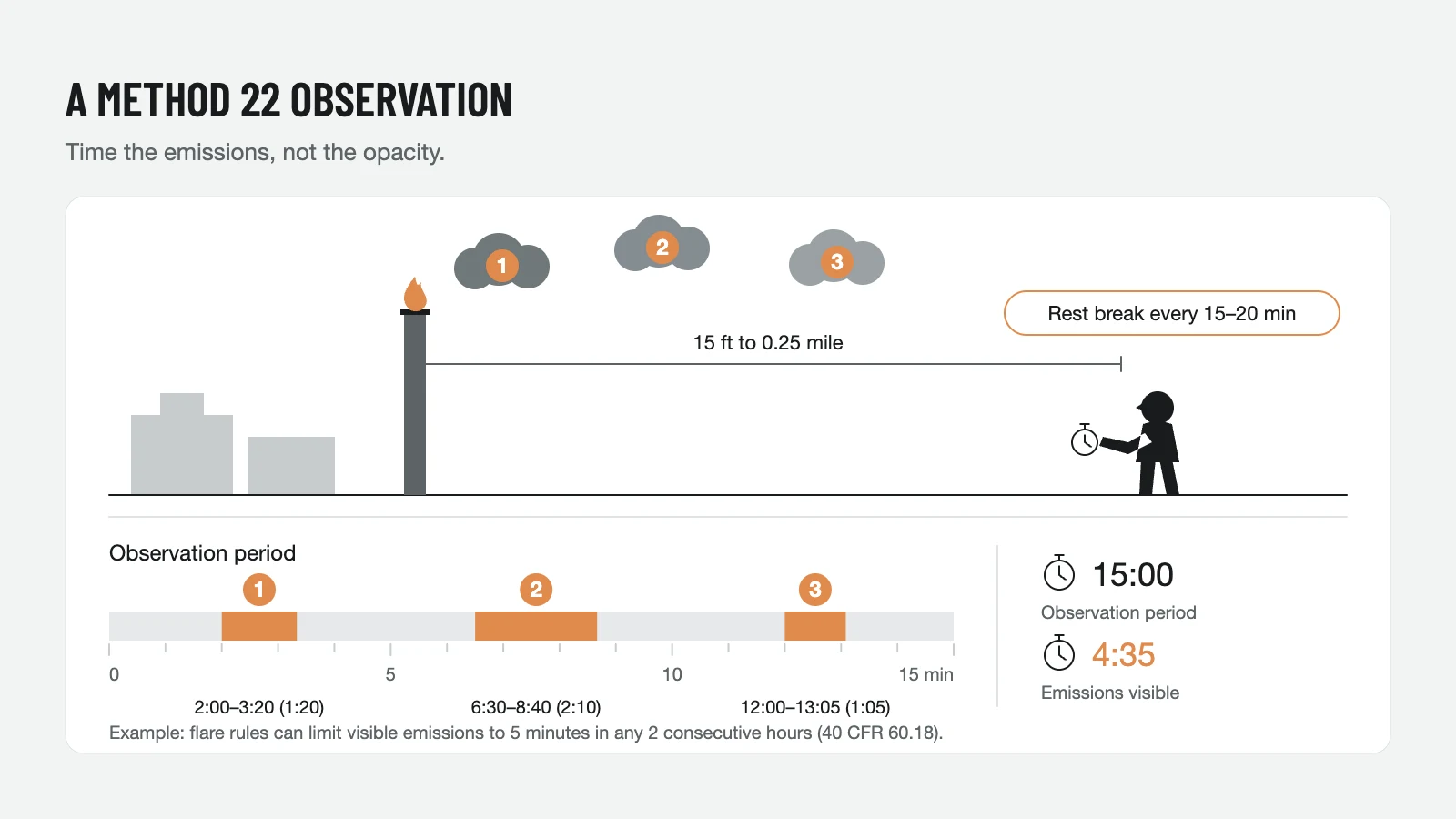
The observer uses two timers: one for the full observation period and one that runs only while emissions are visible. Position, lighting and background are recorded, and long observations include regular rest breaks to keep the reading reliable.

Training requirements

Method 22 does not use the smoke-generator qualification test that Method 9 does. Observers still need training on the general procedures for determining the presence of visible emissions, equivalent to the classroom portion of Method 9 training.
Distance, Lighting and Rest Breaks

Method 22 observations are made from 15 feet to 0.25 mile from the source. The sun does not have to be at your back. For indoor observations or other light sources, the light must be documented and at least 100 lux. Because the observer watches continuously, a rest break is taken every 15 to 20 minutes.

Illustration of a Method 22 observation: an observer timing intermittent visible emissions from a flare with two stopwatches
A Method 22 observation: time the emissions, not the opacity.
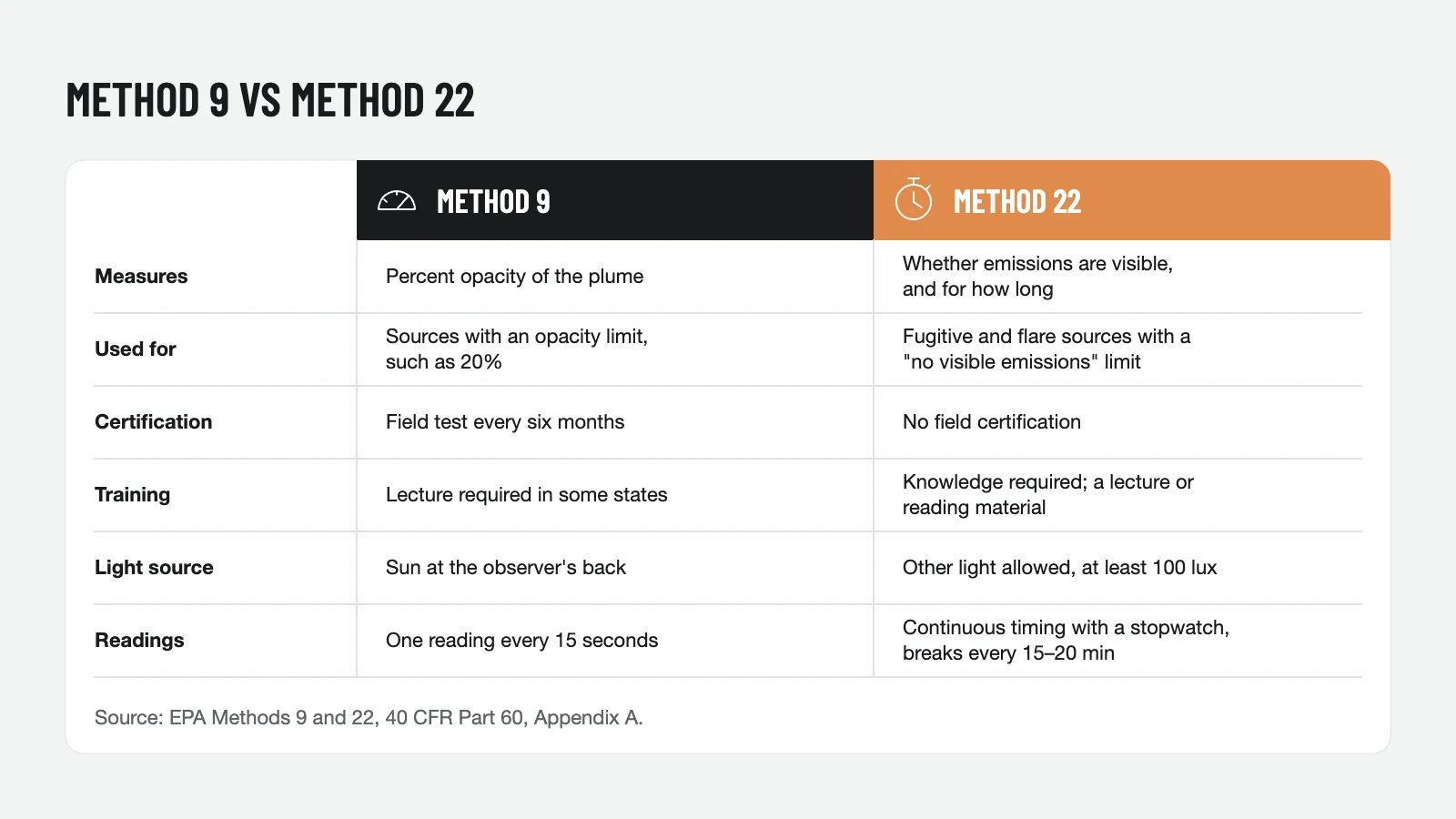
Comparison table of EPA Method 9 and Method 22
Method 22 records the time emissions are visible. Method 9 records how opaque they are.

From planning to documentation

The Process, Step by Step

  1. 01

    Check which method your permit requires

  2. 02

    Train observers on Method 22 procedures

  3. 03

    Set up position, lighting and timers

  4. 04

    Record total time emissions are visible

  5. 05

    File the observation record

Clear answers

Frequently Asked Questions

Have something else in mind? Talk with our team.

What is the difference between Method 9 and Method 22?

Method 9 measures how opaque a plume is, in 5% increments, and requires a certified observer. Method 22 only records whether emissions are visible and for how long. It requires training, but not the six-month smoke-generator certification.

Do I need to be Method 9 certified to perform Method 22?

No. Method 22 requires training in the general procedures for observing visible emissions, equivalent to the classroom part of Method 9 training. Many facilities train the same observers in both methods.

Does Opaque teach Method 22?

Yes. Opaque trains observers in EPA Methods 9, 22 and 203, at public classes and at private onsite schools.

How do I know which method my facility needs?

Your air permit or the applicable regulation names the test method. Check with your environmental professional or regulator if you are unsure.

Explore your options

Let’s plan your next smoke school

Make the Next Certification Simple

Tell us who needs training, where they are, and when their certification is due.